On Saturday, 25 Kent Ave will kick off a new national ritual: Reclamation Day.
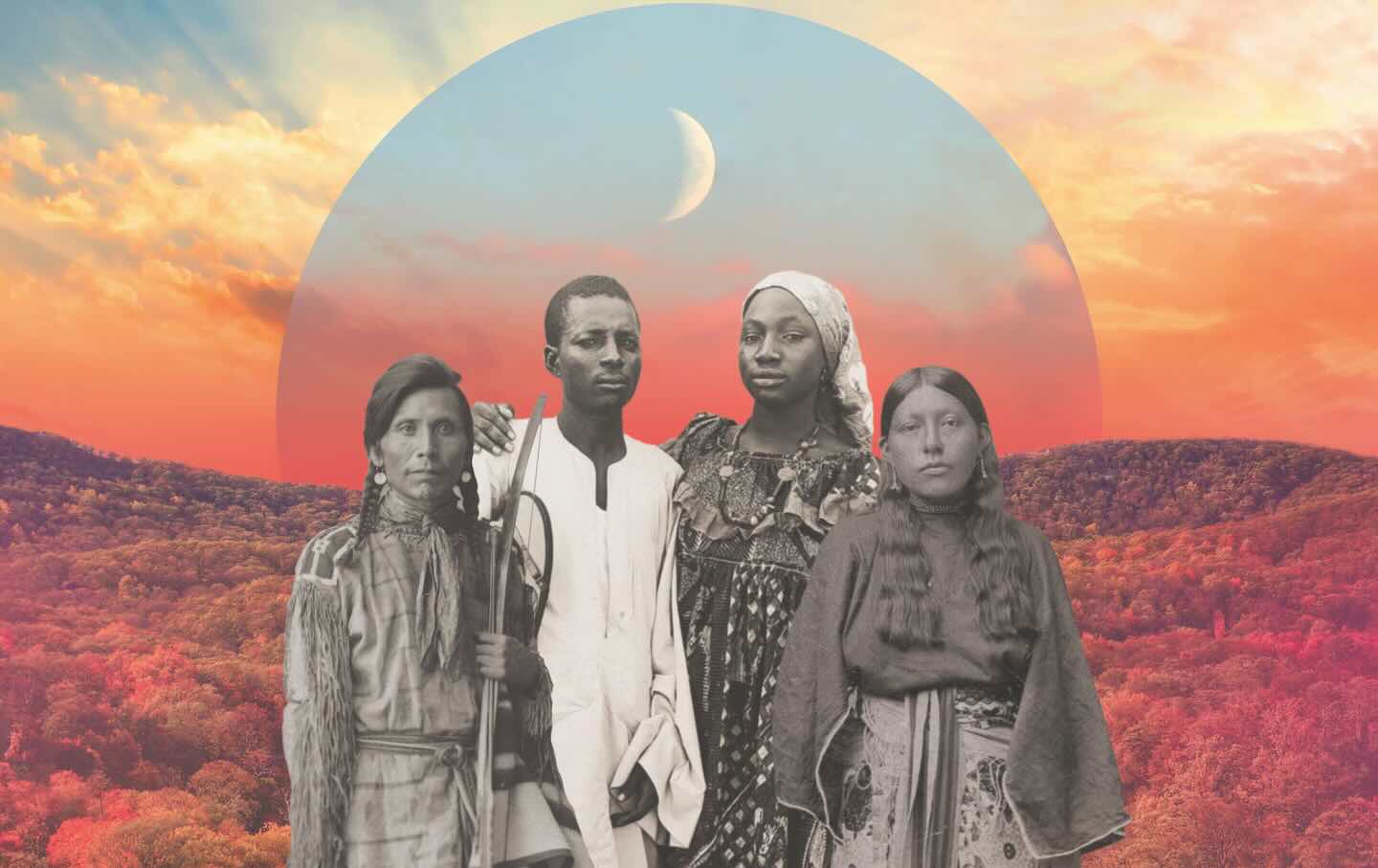
The festivities, held in Brooklyn, will be grounded in Black and Indigenous narratives of joy and resilience, blending art, performance, and movement-building, with over 50 other artists, organizers, and cultural leaders. Reclamation Day, also dubbed a Reunion of Hope, will serve as a counter-commemoration to the nation’s 250th anniversary, occurring one day after Juneteenth. It seeks to tell a truer story of the nation’s semiquincentennial—a part of a larger mass movement to reclaim and reframe the story of America—through the lens of its organizer, the BLIS Collective.
Read more Conservation for Survival
BLIS stands for “Black Liberation, Indigenous Sovereignty,” and the New York City–based Collective is dedicated to building narrative and solidarity infrastructure across movements while growing the cultural and strategic power necessary to pass bold policy. The 46-member collective includes national and local organization leaders, content creators, filmmakers, musicians, comedians, academics, and more—brought together virtually once every two months and then for an in-person retreat once a year.
Though its members differ in individual missions, BLIS collectively centers four main initiatives: Indigenous Land Back, Black Reparations, Guaranteed Income, and Baby Bonds (proposed as “the public provision of a substantial trust fund for newborns from families that are wealth-poor,” a race-neutral policy that would support disproportionately affected Black families). Additionally, the collective supports the work of its membership through access to a million-dollar fund with which they can engage in solidarity-based projects.
One such instance of solidarity comes from collective members Brea Baker and Rebecca Nagle. In a collaborative post on Nagle’s Welcome to Native America Substack, the Native journalist and the Black freedom fighter Baker share the story of their introduction through their respective books, By the Fire We Carry and Rooted, which were released in the same year. The pair worked together blissfully not only on the panels they both spoke on but also in broader conversations. Baker then invited Nagle to join the BLIS Collective.
Recalling the BLIS Collective’s gathering of Black and Indigenous storytellers in North Carolina, called “Disrupting 250,” Baker writes, “Our solidarity and united insistence upon shared visions of justice are the balm and antidote. We are the medicine.”
BLIS’s report on “the impact of braiding narratives of Reparations and Land Back on Black and Indigenous audiences” posits that the economic foundation of the US “rests upon two interlinked systems of oppression: the enslavement of African people and the systematic genocide and dispossession of Indigenous people, land and waters.”
The 47-page report tests three narrative approaches, finding that a “braided narrative”—that links struggles across movements—proves the most effective method for communicating initiatives. In short, braiding the narratives of Black and Indigenous struggles and futures tells a more effective story than sharing each narrative separately.
Carrying their narrative power from harmonious retreats to the contested streets of social media, Nagle, Baker, and other leaders practice consolidation, the uniting of these tragedies, which are most often treated in isolation, to produce truer, more cohesive histories and visions for our collective liberation.
For example, in one TikTok, Mother Jones video correspondent Garrison Hayes connects historical narratives of Native and Black communities to explore how reparations might shape their continually connected futures. Speaking from a local plantation, Hayes shares the story of two interconnected “original sins”: Andrew Jackson’s enslavement of hundreds of Black people on lands stolen from Indigenous tribes, namely the Cherokee, Chickasaw, and Shawnee peoples.
“The interconnection between these two movements are clear and are perhaps our best options for addressing the harms of colonialism and slavery,” Hayes says to his audience of 250k viewers. “And they need your support as they seek to accomplish the same goals, which is to reconstruct our economic, political and social status quo, rewriting a new American story.”
The president of the Stockbridge-Munsee Band of Mohican Indians, Shannon Holsey, who will deliver opening remarks for the festival on June 20, notes the parity between struggles faced by both Black communities and tribal nations.
“In systems that are rooted in land dispossession for tribal nations, broken treaties, and policies of exclusion,” President Holsey told The Nation, “there’s a similarity across the spectrum of people of color. We often see ourselves from a position of weakness. I don’t see it that way.”
Read more How to Revive Progressive-Era Economics for the New Gilded Age
President Holsey urges participants to reimagine futures where sovereignty is not only acknowledged, but understood, upheld, and respected.
“We are no longer the minority,” Holsey said. “Together, we are the majority.”
The festival will comprise three zones—Reclaim, Repair, Reimagine—each asking a grounding question. To reclaim, what does it mean to have our communities preserved, protected, and passed down in spite of colonization, slavery, erasure, and capitalism? To repair, what does it mean for us to stay in relationship with each other when harm is ongoing and unresolved? And to reimagine, what futures might we conceive if we treated hope as a discipline?
Each zone will engage participants in a number of immersive experiences, such as BLIS’s first in-house-produced installation, the Braided Line. In the form of a physical telephone booth, the Braided Line will be a combination of the Black-led project 1-800-Dial-An-Ancestor with snippets from Rebecca Nagle’s award-winning podcast This Land, which documents the far right’s attempts to use Native children to threaten tribal sovereignty and civil rights, and her forthcoming First America podcast. Kinfolk Tech, a founding member organization of the BLIS Collective, will be launching their monument to Juan Rodriguez, New York City’s first documented migrant, in partnership with collective member and “edu-tainer” Kahlil Greene, widely known as the “Gen Z Historian.” Honoring the ways in which migration has shaped the United States, the activation will immerse participants with projections of Rodriguez rowing his canoe above you, reimagined as a man made of water.
Brooklyn native Idris Brewster founded Kinfolk Tech in 2018 in the midst of the city’s deliberations over a Christopher Columbus monument. He originally sought to activate the true story of Columbus, as well as other neglected histories through digital technology. The Kinfolk app was released in 2021 as a digital archive and experiential platform, using augmented reality to transform parks, sidewalks, and city squares with newer, truer monuments celebrating Black, brown, Indigenous, and queer communities in collaboration with artists, historians, and local residents.
“Technology is built to keep you glued to your phone and isolated,” Brewster said. “Our technology is communal. When you go to our activations, you might see 10-20 people looking through their phones. But they’re all looking at the same thing.”
Like BLIS, Kinfolk Tech uses the terms “activate” or “activations” to describe their participation-based reimaginings often made possible through augmented reality. Last October, they hosted their Kin Festival of Memory and Imagination, a 12-day activation of installations and interactive experiences that BLIS cites as inspiration for Reclamation Day. The festival gathered activators of various modalities, methods, and spaces, as well as honored activators-past, with exhibits such as their “There Goes Nikki” spatial experience, honoring then recently passed poet Nikki Giovanni, and their living James Baldwin archive “For Those Who Come After.” Over the course of 12 days, the Kin Festival convened over 6000 attendees in solidarity.
“People are hungry for this knowledge. The sentiment is that society is dumbing down, but we set the right conditions for people to engage that doesn’t feel like teaching, but experiencing,” Brewster told The Nation.
In their research from the Kin Festival, 88 percent of folks felt more hopeful that a just future was possible, and 80 percent felt that they were more deeply connected to their culture and others—progress Reclamation Day seeks to emanate as well.
“Narrative, in the nonprofit space, is often very fact-driven. But the memory work is when you take narrative and add emotion and feeling into the mix,” Brewster said.
In BLIS’s paper answering the question “,” they write, “Every empire knows that before you build the law, you build myth.” Steadfast in their imperative approach to winning the battle over culture through storytelling, the report urges:
“It’s essential to remember that our charge is fundamentally different from that of our opposition. While it may be tempting to mirror their tactics, we must recognize that their struggle is rooted in preserving a status quo built on colonization, racial terror, economic extraction, and systemic gendered violence. We, on the other hand, are called to transform systems and paradigms rooted in the status quo—and, when needed, reimagine wholly new ones—and this is a far more challenging task.”