- Books & the Arts
- July 31, 2014
‘Gross Cruelty and Fraud’ in the Gulf of Tonkin: A Brief History
‘Gross Cruelty and Fraud’ in the Gulf of Tonkin: A Brief History
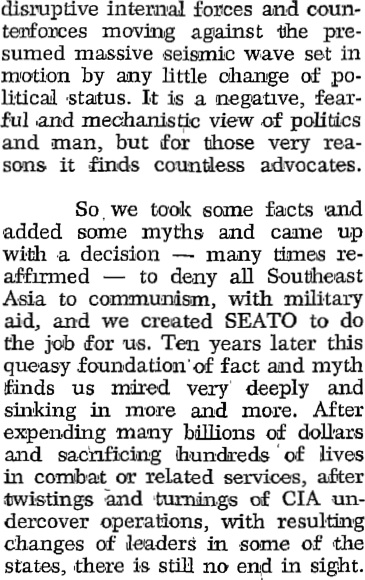
The quagmire of the Vietnam War was built on a “queasy foundation of fact and myth.”
Read more How Much On-Screen Violence Is Too Much?
In August of 1884, the French navy attacked Tonkin, the Northern part of what we today call Vietnam. The area happened to be under Chinese control, but expansion-minded French colonial authorities sought to ensure freedom of access for French traders.
“The story of French action in Tonquin is a story of gross cruelty and fraud,” an essay in The Nation of October 23, 1884, declared.
Published without a byline, the article—a review of a book about the French in Indochina—was written by Robert Durie Osborn, a recently retired lieutenant colonel in the English army in India (described by an author in 1901 as “a red-hot Radical and a perpetual thorn in the side of the Indian Government”). The French campaign, he wrote in The Nation, was nothing short of horrific: “Towns were bombarded, and all prisoners taken in action were shot or hanged without a touch of pity or compunction.”
Beyond its cruelty, Osborn continued, the war was—for the French—neither winnable nor worth winning: “The revenues of the republic…are not in a condition to bear the burden of a distant and costly war.” Even if France did manage to come out of it with a semblance of victory—peace with honor, perhaps?—
it will be with her resources so exhausted and her military strength so impaired that for many a year after she will be in a measure effaced from the politics of Europe. That the possession of Tonquin will be the source of any profit to France, few can anticipate who know the unfortunate result of French colonial enterprises hitherto.
* * *
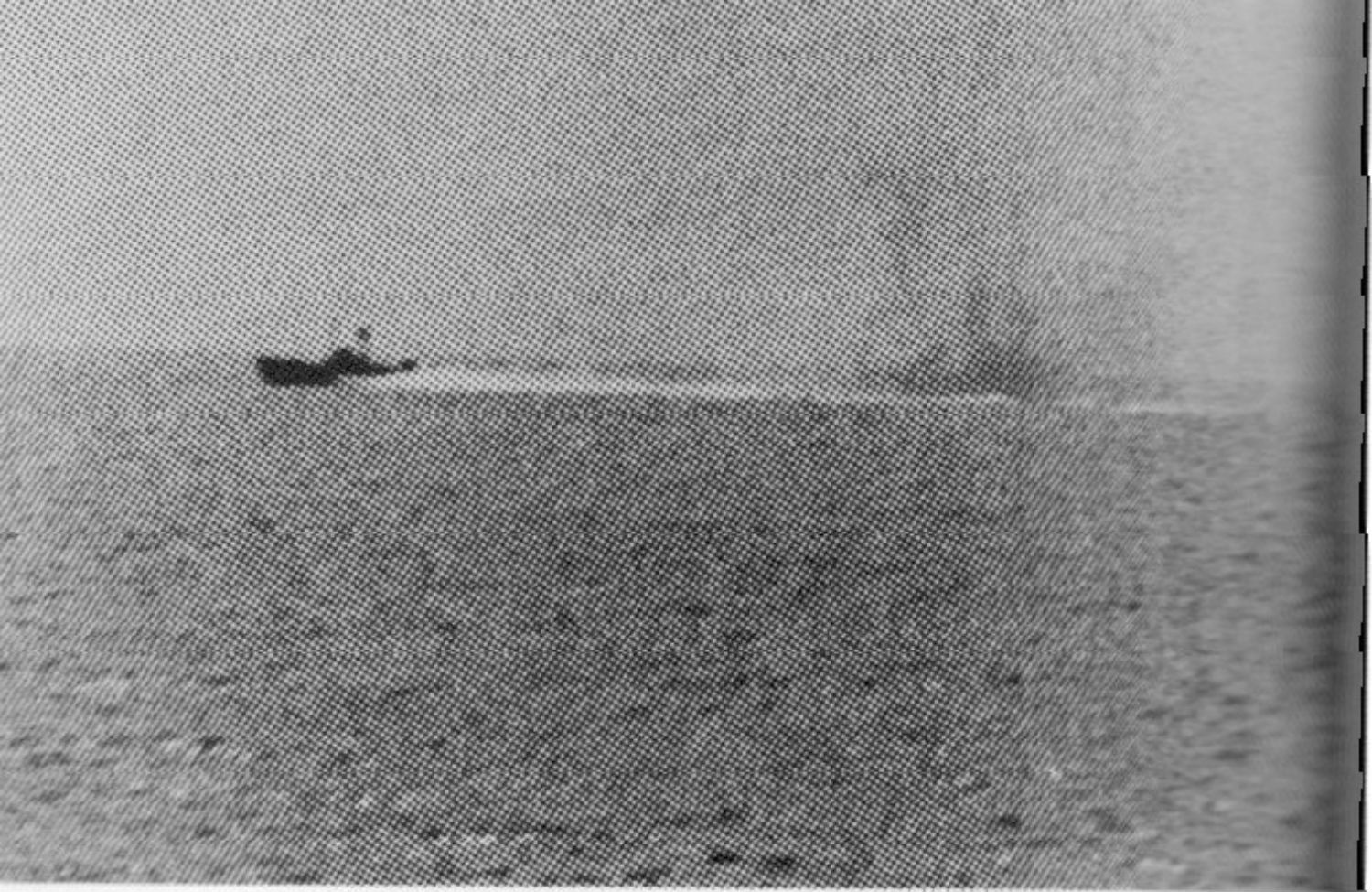
Almost exactly eighty years after the French assault on Tonkin, and fifty years ago this weekend, the United States navy reported that its ships had been attacked some miles off the shore of North Vietnam, in the gulf that bears the old French protectorate’s name. Provocatively, the US ships were patrolling in areas where South Vietnam was conducting active operations against the North, prompting the latter, quite understandably, to perceive the Americans as participants in the hostilities. Torpedo boats approached within a few nautical miles of the USS Maddox, which responded with warning shots. The subsequent firefight killed four North Vietnamese sailors, destroyed several of their boats, and lightly wounded an American ship and a plane.
Two days later, American ships again reported that they were under attack and for hours fiercely maneuvered and fired at North Vietnamese boats, two of which they claimed to have sunk. As it turned out, the American ships had only been picking up radar signals from their own equipment, chasing phantoms as Don Quixote had combated windmills. Regardless, President Lyndon Johnson seized on the incident as a pretext for bombing North Vietnam and drastically escalating American involvement in the war. The Gulf of Tonkin Resolution authorizing such action passed on August 7, 1964, with only two senators objecting: Wayne Morse of Oregon, a frequent Nation contributor, and Ernest Greuning of Alaska, managing editor of this publication in the early 1920s.
“The excessive retaliatory action the President saw fit to order brings us closer to the brink of World War III,” in the next issue. “He laid all the blame on the North Vietnamese and took no account of the fact that there had been prior South Vietnamese and American provocation to match any that we suffered.”
The issue also contained an essay by John Gange, a professor at the University of Oregon and a former State Department official, titled “Misadventure in Vietnam: The Mix of Fact and Myth.” A brief history of American involvement in Indochina since the French defeat at Dienbienphu in 1954, Gange’s report also bears within it warnings of what would indeed doom the US campaign from the start: the impossibility, the immorality, the stupidity of the mission, the utter waste of resources and lives.
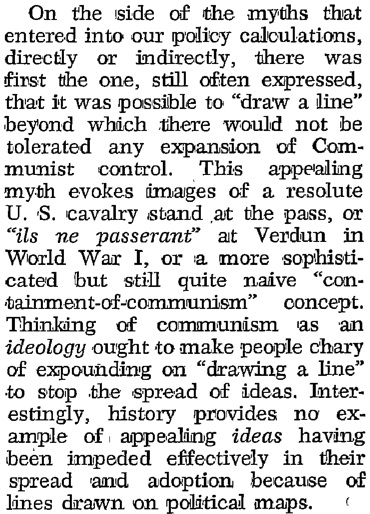
Gange then assailed the myth known as the “domino theory,” the linchpin of American foreign policy during most of the Cold War:
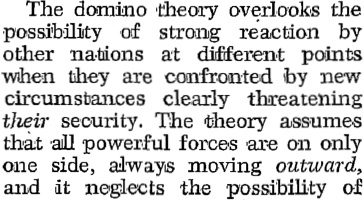
Read more How Much On-Screen Violence Is Too Much?