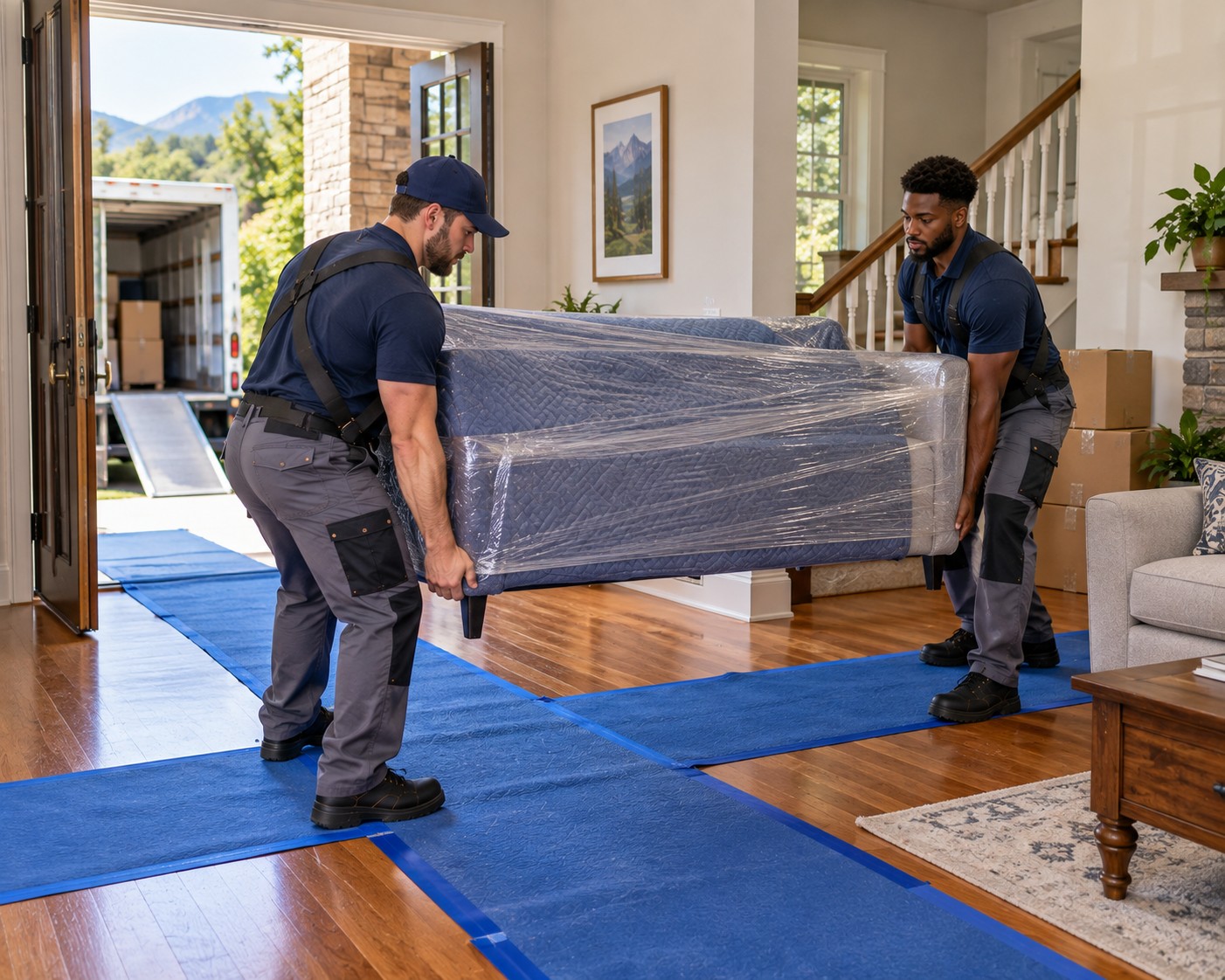
Beautiful hardwood flooring can define the character of an Asheville home. Wide oak planks, restored pine boards, and rich finished floors add warmth to historic houses, modern townhomes, and mountain retreats alike. However, moving day introduces risks that everyday household activity rarely creates. Heavy furniture, grit beneath shoes, metal dolly wheels, and rushed lifting can leave behind scratches, dents, or deep scuffs.
Protecting the floor should be part of the relocation plan from the moment the first box is carried outside. A thoughtful Greensboro relocation strategy, especially one involving professional movers, includes both furniture protection and a clear plan for every walking and carrying route.
Inspect the Flooring Before the Move Begins
Start by walking through the property and identifying areas that may need additional protection. Look for recently refinished sections, loose boards, existing scratches, raised thresholds, and transitions between hardwood, tile, and carpet.
Photographing the floor before moving day is useful when the property contains valuable or newly restored flooring. These images provide a record of its condition and help identify areas that require extra care.
Pay particular attention to entryways. Dirt and small stones carried in from driveways or sidewalks can act like sandpaper beneath furniture legs and moving equipment. Sweeping and vacuuming the route before the crew arrives can remove many of these hazards.
Build a Protected Carrying Path
A protected path should connect the main rooms, hallways, stairs, and exterior door. Do not cover only the area immediately inside the entrance. Furniture often needs to be turned, repositioned, or temporarily staged in wider sections of the home.
Use non-slip floor runners or suitable protective boards designed for moving activity. Secure the edges so they do not curl or shift underfoot. Avoid loose blankets, thin plastic, or materials that become slippery when placed over polished wood.
For a Greensboro relocation that includes multiple properties, prepare both the old residence and the destination. A protected floor at one address does not help if the same furniture damages flooring at the other.
Choose the Right Equipment for Hardwood Surfaces
Furniture sliders can be helpful for certain lightweight pieces, but they should not be used automatically. A slider that collects grit underneath it may drag particles across the finish. Heavy items should be lifted or transported with equipment appropriate to their weight and shape.

Dollies should have clean, suitable wheels and should be used only on properly protected surfaces. When furniture must cross a threshold, avoid allowing its full weight to drop onto the floor. Controlled lifting and slow movement reduce the possibility of dents and impact marks.
Experienced moving professionals can determine whether a sofa, dresser, piano, or solid-wood cabinet should be carried, rolled, or partially disassembled.
Protect Furniture Legs and Sharp Edges
Many floor scratches begin with the bottom of the furniture rather than the moving equipment. Inspect legs, feet, casters, and metal brackets before anything is moved. Remove loose dirt and add protective padding where appropriate.
Do not drag furniture across hardwood, even for a short distance. If a piece is too heavy to lift safely, stop and change the method rather than relying on force.
Doorways and corners deserve attention as well. A large cabinet can damage both the floor and the wall when it is tilted without enough clearance. Measuring the route ahead of time helps prevent last-minute maneuvering.
Account for Asheville’s Home Layouts
Asheville properties may include steep driveways, raised entrances, narrow porches, older staircases, or unusual room layouts. These features can make floor protection more complicated than simply placing a mat by the front door.
Before moving day, identify where the truck can park and how far furniture must travel outdoors. If rain is possible, create a plan for keeping wet shoes, muddy wheels, and damp materials away from exposed hardwood.
Homeowners can review local moving service information at https://milestonerelocation.com/asheville/ when planning a relocation that requires careful handling and detailed access preparation.
Coordinate With the Moving Crew
Clear communication is one of the simplest ways to protect flooring. Tell the crew which rooms have delicate finishes, which areas were recently renovated, and where protective runners should be placed.
A reliable moving team should understand that the floor is part of the property being moved out of and into. With preparation, suitable equipment, and careful coordination, an Asheville relocation can protect both household belongings and the hardwood surfaces that make the home special.