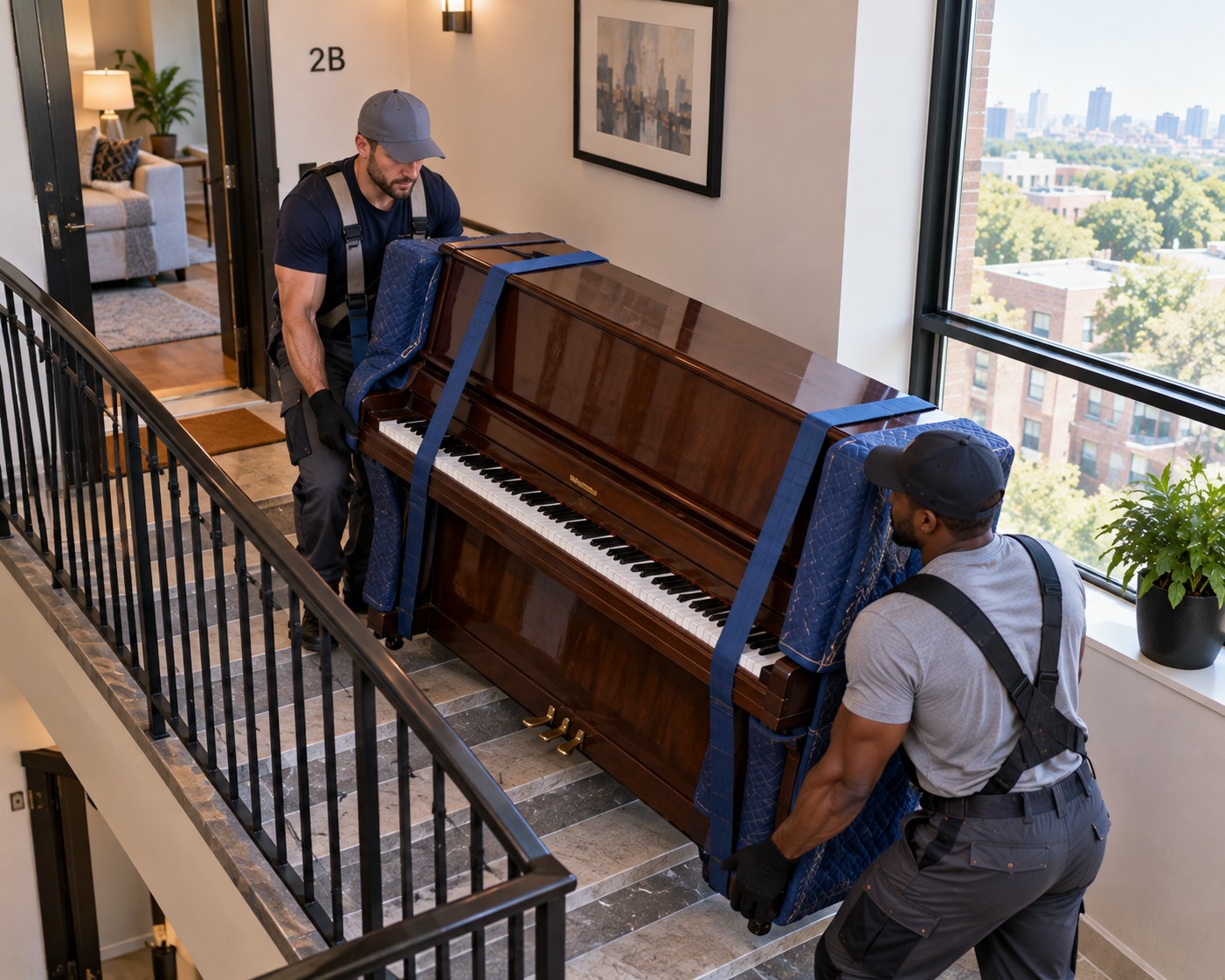
An upright piano can bring warmth, character, and years of memories to an apartment. Moving it, however, is an entirely different experience. A piano may look compact compared with a grand piano, but its weight, delicate internal components, and awkward shape make it difficult to handle—especially when it must leave a second-floor apartment.
Stairs, narrow landings, fragile walls, and limited maneuvering space can turn an ordinary relocation into a serious logistical challenge. Homeowners planning this type of move should work with a team experienced in specialty transportation. Pro Movers and Storage, available through https://promoversandstorage.com/, can help coordinate the careful preparation and movement required for a valuable upright piano.
Why an Upright Piano Requires Specialized Handling
An upright piano is more than a heavy piece of furniture. Inside the cabinet are strings, hammers, keys, pedals, and other components that can be affected by sudden impact or improper positioning.
Weight Is Only Part of the Problem
The piano’s height and narrow depth can make it difficult to grip securely. Its weight is often concentrated unevenly, and the instrument may shift if lifted incorrectly. Carrying it down stairs also creates additional pressure on the legs, casters, and cabinet.
This is why Heavy Specialty Item Piano Movers use different techniques from those used for sofas, dressers, or standard household appliances. The objective is to control the piano’s movement while protecting both the instrument and the building.
Inspect the Apartment Before Moving Day
A successful piano relocation begins before anyone touches the instrument. The moving team should examine the route from the apartment to the outside of the building.
Measure Every Difficult Point
Important areas include:
- Apartment doorways and interior corridors
- Stair width and ceiling clearance
- Landings and sharp turns
- Elevator dimensions, if one is available
- Building entrances and exterior steps
- Parking and loading access
Even a few inches can determine whether the piano can be moved upright, tilted carefully, or transported using specialized equipment. Heavy Specialty Item Piano Movers can use this information to prepare the correct tools and avoid last-minute surprises.
Prepare the Piano and Protect the Property
Before the piano is moved, the keyboard cover, music desk, and other removable parts should be secured or protected. The cabinet should be wrapped with suitable padding to reduce the risk of scratches, dents, and contact damage.
The apartment itself also needs protection. Stair rails, doorframes, flooring, corners, and walls may be vulnerable during the process. Protective coverings and controlled movement help reduce the chance of property damage.
Professional movers should never rely on improvised ropes, household blankets, or an inexperienced group of friends to manage a piano on stairs. A mistake can injure people, damage the instrument, or create expensive repairs.
Moving Down the Staircase
The staircase is usually the most demanding part of the relocation. The piano must be balanced, secured, and guided by people who understand how its weight shifts.
Slow Coordination Matters
Movers need to communicate clearly throughout the descent. Sudden movements, rushing, or allowing the piano to rest heavily on one edge can place stress on the cabinet and internal structure.
Depending on the building, the team may use a piano dolly, straps, stair-climbing equipment, ramps, or other specialty tools. The exact method depends on the piano’s dimensions, the staircase design, and the safest available route.
Pro Movers and Storage can provide a coordinated approach for difficult residential relocations, including moves involving heavy musical instruments and restricted apartment access.
Plan for Transportation and Final Placement
Once the piano reaches the ground level, it still needs to be loaded and secured for transportation. It should be positioned to prevent sliding and excessive movement during the drive. Exposure to extreme temperatures or sudden environmental changes may also affect the instrument, so careful handling should continue after leaving the building.
At the destination, the piano should be placed on a stable surface away from direct sunlight, heating vents, and excessive moisture. After the move, tuning may be necessary because transportation and environmental changes can affect the instrument’s sound.
For an upright piano located on a second floor, the safest decision is to hire Heavy Specialty Item Piano Movers rather than treating the relocation as a standard apartment move. With proper planning, protective equipment, and experienced coordination, the piano can reach its next home without turning a difficult staircase into a costly problem.